The template could be any competitor’s
Swap the logo and the site could belong to any competitor. Generic templates carry generic messaging, and a prospect comparing four vendors has no reason to remember yours.
When a large prospect looks you up before the call, the site should say these people can handle our contract. We build B2B sites that convince the whole buying committee, pass procurement, and report what they earned every month.
Swap the logo and the site could belong to any competitor. Generic templates carry generic messaging, and a prospect comparing four vendors has no reason to remember yours.
A redesign launches, gets celebrated, and then sits untouched for two years while the market moves on. Nobody owns what happens after launch, and the site slowly stops describing what the company sells.
Security questionnaires, contract paper and compliance pages get bolted on after the fact, if at all. Enterprise buyers notice, and the deal stalls in legal for a quarter.
 The Legency Approach
The practitioner, the budget holder, security and the sceptic each find the page written for them, so the champion has something to forward and the deal keeps moving.
Every number carries its source and its window. A buyer who can check one claim stops discounting the rest of the page, and the true parts start doing the convincing.
Security posture, contract paper and compliance pages are part of the build. The security reviewer finds the answers before asking, and the deal that reached legal keeps its momentum.
Built as a component library by a Webflow Enterprise partner, so a new page, a pricing change or a case study goes live without a ticket to engineering.
Rankings, conversion rate and AI citations tracked every month in one report, written to go to a CEO or board as it is. The spend defends itself.
Proof, process and procurement signals shown in the order a B2B committee looks for them, so the site reads like a vendor that has passed review before.
A B2B purchase is agreed by several people, and most of them arrive after the champion forwards a link. A site written only for the champion gives them nothing to forward, which is where most B2B deals quietly stall.
Wants to know whether it does the specific thing they need, and how much of their week it will take to run. Answered by depth: real detail, real screenshots, no marketing abstraction.
Wants the shape of the cost and what happens if it does not work. Answered by posture: how pricing is structured, what a term looks like, and what the exit is. Silence here reads as expensive.
Wants to know whether you will pass review. Answered by a page that exists before they ask: certifications, data handling, subprocessors, insurance, and paper you have signed before.
Has been sold this before and is looking for the catch. Answered by specificity: numbers with methods attached, and an honest account of what the thing does not do.
A logo strip proves someone signed a contract, not that anything worked. A testimonial with no number in it is a sentence the vendor wrote and the client approved. Buyers know this, so they discount all of it, including the parts that are true.
"Named in 16 of 56 AI answers in its category, on a fixed question set re-run every month" can be checked. Naming the source and the window is what turns a claim into evidence, and it costs nothing except the discipline to publish only what you can stand over.
The practical test we use: could a sceptical reader verify this, or at least see exactly how it was measured? If not, it comes off the page.
Campaign pages, new service pages and industry variants come out of the same component set, so marketing stops queueing behind a development sprint for a page that is mostly copy.
A positioning shift or a new CTA updates once and lands across every page using that component. On a hand-built site the same change is a fortnight of find-and-replace and a page you missed.
The system is the thing that decays. Kept clean, a two-year-old build is still cheap to change. Left alone, it becomes the rebuild you paid to avoid.

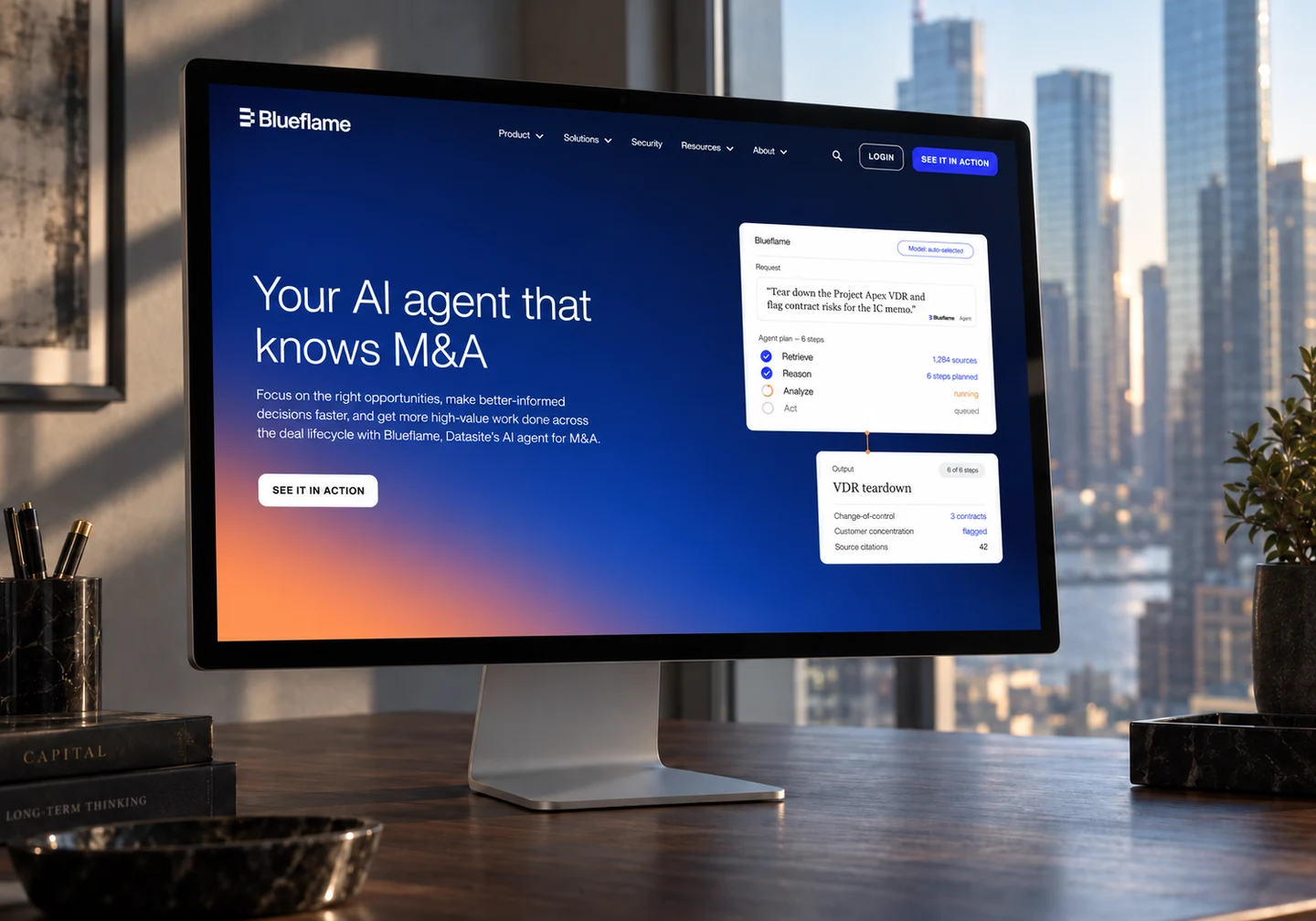
Blueflame’s marketing team runs its site on a component library we built once and have extended for over eighteen months. Organic search now brings more demo requests than paid, and every month closes with an evidence report a leadership team can read in five minutes.
Most B2B sites answer the champion and nobody else on the committee. A call about who else has to say yes where you sell, and what a site that speaks to all of them looks like.
B2B buying involves several stakeholders, longer cycles and procurement scrutiny. A B2B site has to convince a whole committee, most of whom arrive after the champion forwards a link, so proof, process and security signals carry more weight than they would on a consumer site. The site is often the first place a large prospect decides whether the company can handle its contract.
Both. Most engagements start as a redesign: we audit what exists, keep what already ranks and converts, and rebuild the rest as a component system your marketing team can add pages to without a developer.
It means the site carries the trust signals enterprise buyers look for before they book a call: security posture, a clear process, and contract paper ready to sign. We have cleared a 36-question enterprise cyber due diligence and bill through corporate accounts payable ourselves, so the pages are written by people who know what the reviewer asks.
Rankings, conversion rate and AI citations, tracked monthly and reported in one document written to be forwarded to a CEO or board as it is. A site that is measured every month keeps its budget; one that stops being measured after launch has to be defended on taste.